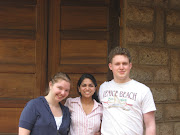
So today was useless. Useless because we tried to get meetings set up but no one was available. The workday apparently ends immediately after lunch over here, but no one told Emma, George, and me. So we looked like three silly khawajas walking from place to place, with no sense of purpose.
We first went to the SSRRC to finish obtaining all the Boma information for each county, but they were not completely done yet. We then went to the Ministry of Health so that I could talk to the Head of Malaria, but he was not there. Because we told the driver to come pick us up after our meeting (which we did not have), we did not know what to do for the next half hour. So we stupidly decided to walk into the town where the marketplace was. This was the first time I had ever walked by the market, and it was definitely less crowded than Juba’s. There is more open space and broader paths between the lines of tin-roofed stands. I saw a lot of vendors selling jewelry, cassettes, shoes, and English movies. There were also car repair shops and fruit stands. Some small boys walked around selling boiled eggs. We walked into a small store that sold stationary items so that Emma could buy notebook paper.
Although this was a different experience for me, it was a stupid adventure. We had to tell our driver we were not at the Ministry, and so we called Lucy (who was sitting next to our driver) to change our plans and pick us up at the market. We were standing in an open area right in front of the SPLM building, and since it looked like a courtyard, we told Lucy to pick us up there. Lucy, however, misunderstood and thought we were at the bombed judicial court located deeper in the market. So we ended up standing right in the middle of the dirt yard, in front of the SPLM building, at the edge of the lively market, for about a half hour waiting for Lucy to arrive. I had never looked so conspicuous and out of place in my life. We looked like three silly, lost khawajas who did not know what to do but stand. Obviously we drew a lot of attention from all the Sudanese who could easily spot us. There were a few schoolchildren brave enough to walk pass us, but they did so slowly and with looks of wonder. I tried to catch some of them off guard by smiling and waving at them. There were also women who asked us “how are you?” as they passed, and there were groups of men who liked to act tough and not wave back at us when we did. This whole scene was really just hilarious for me. Emma called back Lucy again, and told her we were next to a lot of busses and goats. But the thing is, there were busses and goats everywhere! So that was clearly not going to work. Haha. So we called her back and I told her we were next to the SPLM head building. She wanted to find us, but we insisted on walking towards the bombed court building to avoid any more trouble and miscommunication. My head was down for most of the walk partly because I did not want to trip over any ditches in the road…and because I was pretty embarrassed about the way we were drawing so many eyes toward us. I really did not want such strong attention, and I stupidly figured that maybe if I faced the ground as I walked, I could probably blend in with the crowd. But then again, I was walking with Emma and George… At one point, a guy yelled at me and I looked up. He was sitting with a group of guys and yelled, “My friend wants you! The small one! He wants to marry you!” Yeah, it was clearly me he was yelling about. Then George responds, “400 pounds!”...or 400 cows? I don't remember. Stupid George. George later told me I should be flattered that someone wanted to buy me. Yeah yeah.
We got to the broken court building, which Lucy said was still in use, and found our driver. I had never been so happy to climb inside of a car, but I have to admit it was a pretty funny experience for me. I kept laughing to myself the whole ride home. We were supposed to go to the EPI and cold chain again to get more stats and a record of health centers, but we totally blew it off. Besides, no one was going to be there anyways.
We then had a team meeting with Father Vuni to update him on each of our tasks. The great thing about the Diocese is that it built its primary health centers out of an emergency necessity. They did anything they could to serve people no matter what condition the state was in, even if it meant building new health facilities on the spot without the luxury of extensive planning. I truly love the people of this Diocese. Every face is a constant reminder of why I am working day by day to get funds for this church, even if I am not Catholic. Their goodness and love for service extends beyond religious and racial differences, and they truly inspire me to commit my knowledge and skills towards helping others. I really am proud to say that I volunteer for such an organization.
Ok so this last paragraph clearly did not follow the theme of this post, but I had to include it somewhere. :-)
-Neesha
Monday, June 16, 2008

Keyala
I meant to put this up yesterday, but the generator turned off exactly at 10:30 last night. So here is what you guys missed:
Sunday, June 15, 2008
First off, happy birthday to my older brother, Sohil, and a happy father’s day to every father out there! I hope this day is special for you guys.
I just got an email from the U.S. Embassy in Khartoum telling us that there is a cholera outbreak in Juba. I guess we were lucky not to catch any infectious bacterium while we were in Juba, but this is bad news for our team since it diverts attention from the cholera outbreak in Magwe County. We were planning to apply for UN emergency funds specifically allocated for water from the big shot John Rumunu (the man who signed the Global Fund for Southern Sudan) for Magwe County. This would greatly help Eastern Equatoria, and our proposal to tell you the truth, but cholera in any county is never good news I guess.
Throughout today it had been very humid, but now there is a windy storm that just started. The wind is bending the trees and pulling the tents off its anchors. Our door is slamming against the wall, and I hear the thunder roaring outside. But there is a nice sprinkle of rain passing through our open windows, which I really like.
Our team had a special day. We went to Keyala this morning, and it was a very informative experience for all of us. Father Andrew, the Pari from Lafon who leads Shelter for Life, picked us up this morning to stop by the SSRRC. There were policemen, and one policewoman, in blue camouflage clothing ready to join us on this trip. They each had a rifle by their sides, and to tell you the truth, this was the first time I had ever been so close to loaded guns before. C’mon…I come from a sheltered suburban city. Thankfully the UNHCR vehicle posted a white flag on the roof of their car as a signal of peace. But then again, the white flag in Sudan also indicates a location for homemade beer. Anyways, we got inside our vehicles and drove off to see the village less than an hour away. The road was just as terrible as we expected (blame the British), but Ed insisted that Emma and I hold up the GPS outside of our windows to track our route.
The first thing we noticed when we reached the site was a huge green army tank nested by the entrance to the village. Once we parked and unloaded, we saw a row of UN vehicles right beside us and a massive SSRRC truck holding a large container for the kits. There were about a hundred people in front of our car sitting underneath the shade of a tree, and obviously, they all stared at the khawajas. What was most surprising is seeing a group of children climbed on top of the tank, and they were hesitant to approach us until we waved to them. We asked if we could take pictures with them, and they gleefully let us. Emma made a mistake when she showed their pictures on the digital cameras because more than 20 children swarmed around her to see the screen of her camera. They were all asking us to take more pictures of them, but eventually we had to pull away and enter the village. The huts looked familiar; they looked just like the ones we saw driving down to Torit from Juba—circular, clayed walls roofed underneath long, intertwined straws that all joined together at a point. The village is set against a backdrop of green mountains, and the nature of it is a beautiful sight.
We walked through the thick of the greenery on manmade, narrow paths, all of which led to several clusters of huts scattered here and there. There were many women with their babies underneath the huts, and we came over to handshake all of them while saying “Mong!” (“hello!”) in Latuko. We figured that was the best way to display a sense of peace to all of them. Everyone wanted to talk to us and know our names, but the children especially! Some of them were so cute haha. We saw a small, mudded vaccination building with a tin roof (we knew it was a vaccination site because there was a “Polio” chalking on the wall) and started to talk to the people there in horrible, broken Latuko. Some knew very little English and some knew Arabic, but Father Andrew and a police officer translated everything for us. There was a baby there with white patches all over his skin, and I instantly thought of measles because it reminded me of the pictures Joseph took in Nyanyangachor. I am not sure anymore, though, what it was. There were many women who wore patterned pieces of cloth wrapped around them and thrown over their shoulders. There was one old but tall woman who had interesting jagged cuts on her outer ears and a ring surrounding what I thought was a hole in her throat. She complained of chest pain, but we told her we were not doctors and that she should go to the clinic. Many of them were just happy to make conversation to us strangers. A lot of them specifically asked me where I was from (I clearly do not look white ya know), but I had to disappoint them and say I was from the United States. Many knew of California, and more surprisingly, many had guessed I was Indian. Maybe it is not so surprising since there are a lot of Indian and Bangladeshi peace soldiers in Sudan. The Bangladeshis have even created a successful microfinance business here, which is really helping the people.
We stopped by one of the huts where there was a family standing outside watching us. We wanted to ask them questions about nets and malaria, and Father and the police officer translated for us. It turns out that no one in the village owned any nets, and only one family got one recently. They understood the purpose of the nets—to keep away the mosquitoes, and they could link mosquitoes to the disease malaria, which was making their children sick. I was afraid that our questions were leading them to this obvious connection, but Ed and George thought it did not. They knew how to set up nets with sticks and how many people could sleep under them. There was a Merlin clinic, created by a British NGO, 5 walking minutes away which always diagnosed their fevers with malaria. There were also voluntary community health workers who do not carry medicines and traditional birth attendants who are trained and paid for by the government (we do not know how much). We got pretty useful information, but I really wish I had the courage to ask whether they would even bother using the free nets…not as fishing nets or as wedding veils, but for what they are supposed to be meant for.
After the questions, we walked back to the entrance of the village. Ed noticed a solar panel and helped them position it the correct way. He also climbed the tank to see if he could get reception on his cell phone from up there. There was one small open stand of little goods to buy food and other necessities. We also saw people grinding grain into flour using a small machine, and there was white dust floating everywhere around that open shelter.
Because cattle raiders were the cause of this village’s problems, the commissioner told us to take pictures of their cattle as proof of the village’s ownership. The cattle’s outer ears were intricately cut as a sort of branding, and we took pictures of those as well. There were herds of them all bunched together, mooing, eating grass, and mounting each other, and Ed climbed up a termite mound in order to take panoramic shots of them. We could not get to see the burnt parts of the village because there were SPLA soldiers preventing us from seeing something so sensitive. The shallow trenches and the displaced people under the trees were evidence that something happened, but we turned around to avoid any problems.
At one point I felt something pointy on the bottom of my right sandal, and I found some sort of metal chip poking through the sole. I stopped to get it out, and all of sudden men and some officers gathered around me to see what happened. One of them took my sandal and tried to pull out the metal splinter with his teeth. I did not mean to make a scene, but I guess as a khawaja, I am already drawing attention to myself. I wish I thanked the man who pulled out the splinter for me, but I lost my thoughts. I felt really weak when I tried climbing the tank with Ed, and I was probably dehydrated. Gatorade helped a lot though, and I spilled a quarter of it from the canteen when we drove back on the bumpy road.
On the way to Torit, we saw Russians driving a line of trucks with oil tanks. They were followed by a truck full of SPLA soldiers, and at the back of the truck was a machine gun. For a second my heart skipped a beat, but they were just protecting the oil in front of them. The Russians were probably subcontractors. Father Andrew said that the Chinese will probably start pouring their money directly to Southern Sudan, where the oil is mostly, if the South separates officially. The SPLM nominee for the next governor of S.Sudan is a man from Kapoeta who went to primary school with Father Vuni. The SPLM will most likely win against the other main party, NCP.
This trip was educational, particularly for Emma the anthropologist. We are going to come back because Ed assigned one of the women to create a song encouraging the village to use mosquito nets. It worked before in the 70s, when a Dinka singer made a song encouraging her villagers to use oxen for plowing. She worked Ed into the song as the “man who talks so much his saliva runs out”. Haha so funny, and yet soooo true. Haha.
Ok the rain just stopped. Rain here is very quick, as is the daylight here. The sun rises late and sets very early, but I guess this happens near the equator. I am also hearing whispers right now, probably intensified by the mephloquine I took earlier today, so I am going to go back to my room and sleep. Good night until tomorrow!
-Neesha
Sunday, June 15, 2008
First off, happy birthday to my older brother, Sohil, and a happy father’s day to every father out there! I hope this day is special for you guys.
I just got an email from the U.S. Embassy in Khartoum telling us that there is a cholera outbreak in Juba. I guess we were lucky not to catch any infectious bacterium while we were in Juba, but this is bad news for our team since it diverts attention from the cholera outbreak in Magwe County. We were planning to apply for UN emergency funds specifically allocated for water from the big shot John Rumunu (the man who signed the Global Fund for Southern Sudan) for Magwe County. This would greatly help Eastern Equatoria, and our proposal to tell you the truth, but cholera in any county is never good news I guess.
Throughout today it had been very humid, but now there is a windy storm that just started. The wind is bending the trees and pulling the tents off its anchors. Our door is slamming against the wall, and I hear the thunder roaring outside. But there is a nice sprinkle of rain passing through our open windows, which I really like.
Our team had a special day. We went to Keyala this morning, and it was a very informative experience for all of us. Father Andrew, the Pari from Lafon who leads Shelter for Life, picked us up this morning to stop by the SSRRC. There were policemen, and one policewoman, in blue camouflage clothing ready to join us on this trip. They each had a rifle by their sides, and to tell you the truth, this was the first time I had ever been so close to loaded guns before. C’mon…I come from a sheltered suburban city. Thankfully the UNHCR vehicle posted a white flag on the roof of their car as a signal of peace. But then again, the white flag in Sudan also indicates a location for homemade beer. Anyways, we got inside our vehicles and drove off to see the village less than an hour away. The road was just as terrible as we expected (blame the British), but Ed insisted that Emma and I hold up the GPS outside of our windows to track our route.
The first thing we noticed when we reached the site was a huge green army tank nested by the entrance to the village. Once we parked and unloaded, we saw a row of UN vehicles right beside us and a massive SSRRC truck holding a large container for the kits. There were about a hundred people in front of our car sitting underneath the shade of a tree, and obviously, they all stared at the khawajas. What was most surprising is seeing a group of children climbed on top of the tank, and they were hesitant to approach us until we waved to them. We asked if we could take pictures with them, and they gleefully let us. Emma made a mistake when she showed their pictures on the digital cameras because more than 20 children swarmed around her to see the screen of her camera. They were all asking us to take more pictures of them, but eventually we had to pull away and enter the village. The huts looked familiar; they looked just like the ones we saw driving down to Torit from Juba—circular, clayed walls roofed underneath long, intertwined straws that all joined together at a point. The village is set against a backdrop of green mountains, and the nature of it is a beautiful sight.
We walked through the thick of the greenery on manmade, narrow paths, all of which led to several clusters of huts scattered here and there. There were many women with their babies underneath the huts, and we came over to handshake all of them while saying “Mong!” (“hello!”) in Latuko. We figured that was the best way to display a sense of peace to all of them. Everyone wanted to talk to us and know our names, but the children especially! Some of them were so cute haha. We saw a small, mudded vaccination building with a tin roof (we knew it was a vaccination site because there was a “Polio” chalking on the wall) and started to talk to the people there in horrible, broken Latuko. Some knew very little English and some knew Arabic, but Father Andrew and a police officer translated everything for us. There was a baby there with white patches all over his skin, and I instantly thought of measles because it reminded me of the pictures Joseph took in Nyanyangachor. I am not sure anymore, though, what it was. There were many women who wore patterned pieces of cloth wrapped around them and thrown over their shoulders. There was one old but tall woman who had interesting jagged cuts on her outer ears and a ring surrounding what I thought was a hole in her throat. She complained of chest pain, but we told her we were not doctors and that she should go to the clinic. Many of them were just happy to make conversation to us strangers. A lot of them specifically asked me where I was from (I clearly do not look white ya know), but I had to disappoint them and say I was from the United States. Many knew of California, and more surprisingly, many had guessed I was Indian. Maybe it is not so surprising since there are a lot of Indian and Bangladeshi peace soldiers in Sudan. The Bangladeshis have even created a successful microfinance business here, which is really helping the people.
We stopped by one of the huts where there was a family standing outside watching us. We wanted to ask them questions about nets and malaria, and Father and the police officer translated for us. It turns out that no one in the village owned any nets, and only one family got one recently. They understood the purpose of the nets—to keep away the mosquitoes, and they could link mosquitoes to the disease malaria, which was making their children sick. I was afraid that our questions were leading them to this obvious connection, but Ed and George thought it did not. They knew how to set up nets with sticks and how many people could sleep under them. There was a Merlin clinic, created by a British NGO, 5 walking minutes away which always diagnosed their fevers with malaria. There were also voluntary community health workers who do not carry medicines and traditional birth attendants who are trained and paid for by the government (we do not know how much). We got pretty useful information, but I really wish I had the courage to ask whether they would even bother using the free nets…not as fishing nets or as wedding veils, but for what they are supposed to be meant for.
After the questions, we walked back to the entrance of the village. Ed noticed a solar panel and helped them position it the correct way. He also climbed the tank to see if he could get reception on his cell phone from up there. There was one small open stand of little goods to buy food and other necessities. We also saw people grinding grain into flour using a small machine, and there was white dust floating everywhere around that open shelter.
Because cattle raiders were the cause of this village’s problems, the commissioner told us to take pictures of their cattle as proof of the village’s ownership. The cattle’s outer ears were intricately cut as a sort of branding, and we took pictures of those as well. There were herds of them all bunched together, mooing, eating grass, and mounting each other, and Ed climbed up a termite mound in order to take panoramic shots of them. We could not get to see the burnt parts of the village because there were SPLA soldiers preventing us from seeing something so sensitive. The shallow trenches and the displaced people under the trees were evidence that something happened, but we turned around to avoid any problems.
At one point I felt something pointy on the bottom of my right sandal, and I found some sort of metal chip poking through the sole. I stopped to get it out, and all of sudden men and some officers gathered around me to see what happened. One of them took my sandal and tried to pull out the metal splinter with his teeth. I did not mean to make a scene, but I guess as a khawaja, I am already drawing attention to myself. I wish I thanked the man who pulled out the splinter for me, but I lost my thoughts. I felt really weak when I tried climbing the tank with Ed, and I was probably dehydrated. Gatorade helped a lot though, and I spilled a quarter of it from the canteen when we drove back on the bumpy road.
On the way to Torit, we saw Russians driving a line of trucks with oil tanks. They were followed by a truck full of SPLA soldiers, and at the back of the truck was a machine gun. For a second my heart skipped a beat, but they were just protecting the oil in front of them. The Russians were probably subcontractors. Father Andrew said that the Chinese will probably start pouring their money directly to Southern Sudan, where the oil is mostly, if the South separates officially. The SPLM nominee for the next governor of S.Sudan is a man from Kapoeta who went to primary school with Father Vuni. The SPLM will most likely win against the other main party, NCP.
This trip was educational, particularly for Emma the anthropologist. We are going to come back because Ed assigned one of the women to create a song encouraging the village to use mosquito nets. It worked before in the 70s, when a Dinka singer made a song encouraging her villagers to use oxen for plowing. She worked Ed into the song as the “man who talks so much his saliva runs out”. Haha so funny, and yet soooo true. Haha.
Ok the rain just stopped. Rain here is very quick, as is the daylight here. The sun rises late and sets very early, but I guess this happens near the equator. I am also hearing whispers right now, probably intensified by the mephloquine I took earlier today, so I am going to go back to my room and sleep. Good night until tomorrow!
-Neesha
Saturday, June 14, 2008
LD and TFS time
Ok so today was the first time Berkeley library failed me. I tried to look up online articles on a Japanese anthropologist, Eisei Kurimoto, for Emma. He came to Southern Sudan in 2007 to study the Pari people in Lafon, and he submitted his findings to the SSRRC. I tried to find more of his articles and books online, but there were only hardcopies available. When I did find an electronic resource, the article just mentioned his work as a reference. I got frustrated, maybe because I also had to relearn Melvyl and all the links again, and so I gave up on that Japanese guy. I then started to look up more Global Fund information and tips on writing proposals, which seemed pretty straightforward. “Keep it simple and realistic”, basically.
We were supposed to go to Keyala (or Heyala) today with Rex and distribute kits made up of non-food items, plastic sheets, buckets, and mosquito nets to about 500 internally displaced people over there. The village was recently burned down, I guess about a few weeks ago, by the army. This whole chaos started with two rival cattle raiding groups uniting and opposing the government, which was trying to get in and stop the whole mess in Keyala. Supposedly only four people, two from each village, were recorded dead, but this happened 4 in the morning...so we really do not know. Anyways, I am trying not to reveal so much to be on the safe side (but it is difficult for me to keep this information to a bare minimum since I am typing this blog for my own sake as well). Just know that now SSRRC and other organizations like Shelter for Life and UNHRC (UN Human Refugee something) are trying to help. Our team is mainly going to see the action of distribution firsthand and get some ideas for our report, but in reality, I just want to go and see this village! BUT, they are still loading their cars with the items and it is taking a long time. So we are going to go tomorrow instead. But this is actually a good delay since it gives our team this whole day to do whatever we need to do. Yeah so I am just reading articles and relaxing right now. This is the first time since we have reached Africa when we have no meetings, conferences, or sites scheduled to attend, and I gotta admit it feels great. I even took an hour nap to freshen up! :-)
Here are some randoms:
1. Right now I am smiling to myself because our cook is listening to Spanish music--Juanes and Shakira. haha oh man, the music here is definitely global.
2. I am itching my legs like crazy because of the stupid mosquito bites. Before I could easily ignore these bites, but now I have a few on my feet which brush up against my sandals. The ones on the feet are the worse, and my calamine lotion is not helping at all. I do not even think hydrocortisone will do anything. Emma claims that the flies are worse than the mosquitos here, but I hate the mosquitos. If there is one thing I will be happy to leave when I come back to the United States, it is definitely the mosquitos. My hatred towards mosquitos is also probably amplified by the ultimate nagging reason I am here in Sudan: to defeat these little critters in our fight against malaria. See, they are the root of all our problems here!
3. Speaking of feet, my feet are looking noticeably awful by the day. Not only are there blotches of red mosquitos bites all over them, but they are becoming more calloused, tanned, and dirtier as each day passes. I mean, my feet were already getting cracked from walking up the hills of Berkeley, but this is worse. I think the first thing I will do when I get home is get a pedicure for the first time in my life.
4. There are so many lizards here! They come in so many different strange combination of colors, like one with an orange body and black tail, and they all like to pump their torsos up and down as if to display some aggressive behavior. There is one on the window pane right now, and it is probably inside because it is hotter here. There is also a skinny, long legged spider wrapping web around an insect it caught right next to me. It keeps rotating the insect around and around into a cocoon...and now it is eating it. eww. The insects here are gigantic! We see inch-long ants, 6-inch long beetles, hella long millipedes, and beautifully decorated wasps. Before taking Bio 1AL, I would have squealed and ran away from them, but now I just stop in amazement and stare.
5. I am not used to using fabric softeners whenever I do laundry at school, but I can totally understand why I would use them here...except that they do not have any. Laundry is handwashed here, by the way.
6.The generator was on way past 11 last night. I was wondering why it was on for so long, since it turns off by 10:30, but then there was a soccer game on with Holland playing. That, apparently, was a major excuse to leave it on.
Ok I am done with the randomness.
We learned some Pari words while we were in the SSRRC earlier today because Emma and George are going to go to Lafon for Emma’s research and George’s mapping. There are many people who are coming back and reintegrating in Lafon, and so the SSRRC is going there to help as well. I will remain in Torit with Ed for a conference on disarmament that Father Vuni will speak in. He is letting me present a piece on how our plan for malaria control will contribute to peacebuilding and development. So I guess I will be preparing for that during the next few days here. I think will leave you today with some of these Pari words (the spelling will be completely off, of course):
Mahadi—hello
Nidi—how are you?
Bear—good
Ningayna—what is your name?
Anapucha—thank you
Enjoy!
-Neesha
P.S. I have a new GemTel number. It is +256.477.171.339, but keep in mind that roaming charges are ridiculous. Email is best.
We were supposed to go to Keyala (or Heyala) today with Rex and distribute kits made up of non-food items, plastic sheets, buckets, and mosquito nets to about 500 internally displaced people over there. The village was recently burned down, I guess about a few weeks ago, by the army. This whole chaos started with two rival cattle raiding groups uniting and opposing the government, which was trying to get in and stop the whole mess in Keyala. Supposedly only four people, two from each village, were recorded dead, but this happened 4 in the morning...so we really do not know. Anyways, I am trying not to reveal so much to be on the safe side (but it is difficult for me to keep this information to a bare minimum since I am typing this blog for my own sake as well). Just know that now SSRRC and other organizations like Shelter for Life and UNHRC (UN Human Refugee something) are trying to help. Our team is mainly going to see the action of distribution firsthand and get some ideas for our report, but in reality, I just want to go and see this village! BUT, they are still loading their cars with the items and it is taking a long time. So we are going to go tomorrow instead. But this is actually a good delay since it gives our team this whole day to do whatever we need to do. Yeah so I am just reading articles and relaxing right now. This is the first time since we have reached Africa when we have no meetings, conferences, or sites scheduled to attend, and I gotta admit it feels great. I even took an hour nap to freshen up! :-)
Here are some randoms:
1. Right now I am smiling to myself because our cook is listening to Spanish music--Juanes and Shakira. haha oh man, the music here is definitely global.
2. I am itching my legs like crazy because of the stupid mosquito bites. Before I could easily ignore these bites, but now I have a few on my feet which brush up against my sandals. The ones on the feet are the worse, and my calamine lotion is not helping at all. I do not even think hydrocortisone will do anything. Emma claims that the flies are worse than the mosquitos here, but I hate the mosquitos. If there is one thing I will be happy to leave when I come back to the United States, it is definitely the mosquitos. My hatred towards mosquitos is also probably amplified by the ultimate nagging reason I am here in Sudan: to defeat these little critters in our fight against malaria. See, they are the root of all our problems here!
3. Speaking of feet, my feet are looking noticeably awful by the day. Not only are there blotches of red mosquitos bites all over them, but they are becoming more calloused, tanned, and dirtier as each day passes. I mean, my feet were already getting cracked from walking up the hills of Berkeley, but this is worse. I think the first thing I will do when I get home is get a pedicure for the first time in my life.
4. There are so many lizards here! They come in so many different strange combination of colors, like one with an orange body and black tail, and they all like to pump their torsos up and down as if to display some aggressive behavior. There is one on the window pane right now, and it is probably inside because it is hotter here. There is also a skinny, long legged spider wrapping web around an insect it caught right next to me. It keeps rotating the insect around and around into a cocoon...and now it is eating it. eww. The insects here are gigantic! We see inch-long ants, 6-inch long beetles, hella long millipedes, and beautifully decorated wasps. Before taking Bio 1AL, I would have squealed and ran away from them, but now I just stop in amazement and stare.
5. I am not used to using fabric softeners whenever I do laundry at school, but I can totally understand why I would use them here...except that they do not have any. Laundry is handwashed here, by the way.
6.The generator was on way past 11 last night. I was wondering why it was on for so long, since it turns off by 10:30, but then there was a soccer game on with Holland playing. That, apparently, was a major excuse to leave it on.
Ok I am done with the randomness.
We learned some Pari words while we were in the SSRRC earlier today because Emma and George are going to go to Lafon for Emma’s research and George’s mapping. There are many people who are coming back and reintegrating in Lafon, and so the SSRRC is going there to help as well. I will remain in Torit with Ed for a conference on disarmament that Father Vuni will speak in. He is letting me present a piece on how our plan for malaria control will contribute to peacebuilding and development. So I guess I will be preparing for that during the next few days here. I think will leave you today with some of these Pari words (the spelling will be completely off, of course):
Mahadi—hello
Nidi—how are you?
Bear—good
Ningayna—what is your name?
Anapucha—thank you
Enjoy!
-Neesha
P.S. I have a new GemTel number. It is +256.477.171.339, but keep in mind that roaming charges are ridiculous. Email is best.
Friday, June 13, 2008
Google and Berkeley
Currently I am on George's laptop because Emma has the keys to our room and I can't get mine out. This morning Emma and George were supposed to meet Rex Olum again to gather his maps and population data on a flashdrive. He has six maps available, but he did not have all the Boma names at the instant they came. So he is radioing all his Boma supervisors from each area to get names quickly for Emma. As he was doing that, they went off to the market and ran into some strange, sketchy encounter with the national security (not associated with the SPLM). To read more about the encounter, go to Emma's blog.
Meanwhile Ed, Father Vuni, and I were supposed to go shopping to get adapters, some food, more fuel, and to exchange our money for Sudanese pounds (they gave us 207 for every $100, but we thought it should be 210). However Ed took us to a meeting with the Ministry of Health again to talk to the head of Malaria. We found the Director General and talked to him a bit about our plans, and then the Malaria head, Dominic, came. He told us that they have trained some people from primary health care centers in different counties, even from NGO ones, and they gave kits with a book for the national policy of S. Sudan. He is trying to set up a meeting with different NGOs and other organizations to collect information on their campaigns against malaria, and possibly set up a uniform data for all the information.
Then we went to see Father Ben to give him money for the SIM cards, but he was not there. Ed ended up talking to a Father Batiste, who told us information about different materials village people use to post up their nets and whether they actually buy nets from the market. It turns out a lot of them do not because they believe they will get it free from somewhere eventually, like from an NGO. Then he went on to describing the Ikwotos County, which is relatively new, and the Payams and Bomas within it. The counties are always shifting and there are some new ones that come up because the boundaries in Southern Sudan are not definite. For example, there is supposed to be a new Lafon County, but the Lopit do not like the name because they are not from Lafon. So now they want to call the county Lopa, which includes the Lopit and the Pari. This poses a problem for us if we want to gather information about each county, which is what Emma and George was trying to get from Rex.
Father Vuni had to get back to the Diocese for a meeting, so we could not go shopping like we planned. Ed dropped me off here and went to pick up Emma and George instead. They went shopping while I searched google scholar for some articles on net distribution in Ethiopia. I am so stoked to have online access to the Berkeley library because I can obtain nearly every electronic resource we need. I was so surprised when George could not get everything from his Yale links, and I was seriously thanking the Berkeley library. I am really really really really happy that our university, although limited in funds, has put money into something really useful. Anyways, that is what I am going to do today...read the articles. We are supposed to go to the LWF (Lutheran World Federation) next door, which is run by a Nepalese, because they have experience distributing food in some sites in Southern Sudan...and because they are highly computerized. Ed went but he only gave them his card because everyone was in an important meeting.
He later had a talk with Sister Florence, who came from one of our hospitals in Kapoeta. He basically badgered her on cutting down the workers' salaries there (we pay most for salaries at about $30,000 a month, of which only $13,000 is subsidized from our donor) and to reduce the number of workers (even though we need more according to Emmanual).
I am going to finish posting my time in Juba really soon, hopefully. By the way, I posted a link on the left to pictures we had taken in Nairobi and Juba. Take a look at the beautiful Nile from the plane.
-Neesha
Well here is a story to leave my blog for today. This is the more detailed version. A boy from the small Buya tribe in Kimatong was sitting next to his church when the SPLA came in and rounded up people. He was very tall for a six year-old and was isolated from his family to become a boy soldier. However at the time, all the boys they got were getting sick from diarrhea and many soldiers felt it was useless to train them. An SPLA officer let one of them escape, and the boy followed him into the jungle. They were lucky not to get attacked by hyenas and lions on the way to Uganda and on the way to Kenya, where they found a refugee camp. There he was accepted to come to the United States as a lost boy. Although many of these lost boys end up working in low-end jobs when they arrive, he showed a lot of promise as one of the top runners in his high school and in the nation. This talent granted him acceptance into one of the top universities for running, Arizona State. HBO Real Sports went to feature him and they found his family in Sudan. He is now training for the upcoming 2008 Beijing Olympics to prove to the Chinese that the Sudanese can succeed. His name is Lopez Lomong, and I will be rooting for him. He will be running under the U.S., though, as a thank you to us.
Reminders:
Ryan, remember to do my telebears!
Meanwhile Ed, Father Vuni, and I were supposed to go shopping to get adapters, some food, more fuel, and to exchange our money for Sudanese pounds (they gave us 207 for every $100, but we thought it should be 210). However Ed took us to a meeting with the Ministry of Health again to talk to the head of Malaria. We found the Director General and talked to him a bit about our plans, and then the Malaria head, Dominic, came. He told us that they have trained some people from primary health care centers in different counties, even from NGO ones, and they gave kits with a book for the national policy of S. Sudan. He is trying to set up a meeting with different NGOs and other organizations to collect information on their campaigns against malaria, and possibly set up a uniform data for all the information.
Then we went to see Father Ben to give him money for the SIM cards, but he was not there. Ed ended up talking to a Father Batiste, who told us information about different materials village people use to post up their nets and whether they actually buy nets from the market. It turns out a lot of them do not because they believe they will get it free from somewhere eventually, like from an NGO. Then he went on to describing the Ikwotos County, which is relatively new, and the Payams and Bomas within it. The counties are always shifting and there are some new ones that come up because the boundaries in Southern Sudan are not definite. For example, there is supposed to be a new Lafon County, but the Lopit do not like the name because they are not from Lafon. So now they want to call the county Lopa, which includes the Lopit and the Pari. This poses a problem for us if we want to gather information about each county, which is what Emma and George was trying to get from Rex.
Father Vuni had to get back to the Diocese for a meeting, so we could not go shopping like we planned. Ed dropped me off here and went to pick up Emma and George instead. They went shopping while I searched google scholar for some articles on net distribution in Ethiopia. I am so stoked to have online access to the Berkeley library because I can obtain nearly every electronic resource we need. I was so surprised when George could not get everything from his Yale links, and I was seriously thanking the Berkeley library. I am really really really really happy that our university, although limited in funds, has put money into something really useful. Anyways, that is what I am going to do today...read the articles. We are supposed to go to the LWF (Lutheran World Federation) next door, which is run by a Nepalese, because they have experience distributing food in some sites in Southern Sudan...and because they are highly computerized. Ed went but he only gave them his card because everyone was in an important meeting.
He later had a talk with Sister Florence, who came from one of our hospitals in Kapoeta. He basically badgered her on cutting down the workers' salaries there (we pay most for salaries at about $30,000 a month, of which only $13,000 is subsidized from our donor) and to reduce the number of workers (even though we need more according to Emmanual).
I am going to finish posting my time in Juba really soon, hopefully. By the way, I posted a link on the left to pictures we had taken in Nairobi and Juba. Take a look at the beautiful Nile from the plane.
-Neesha
Well here is a story to leave my blog for today. This is the more detailed version. A boy from the small Buya tribe in Kimatong was sitting next to his church when the SPLA came in and rounded up people. He was very tall for a six year-old and was isolated from his family to become a boy soldier. However at the time, all the boys they got were getting sick from diarrhea and many soldiers felt it was useless to train them. An SPLA officer let one of them escape, and the boy followed him into the jungle. They were lucky not to get attacked by hyenas and lions on the way to Uganda and on the way to Kenya, where they found a refugee camp. There he was accepted to come to the United States as a lost boy. Although many of these lost boys end up working in low-end jobs when they arrive, he showed a lot of promise as one of the top runners in his high school and in the nation. This talent granted him acceptance into one of the top universities for running, Arizona State. HBO Real Sports went to feature him and they found his family in Sudan. He is now training for the upcoming 2008 Beijing Olympics to prove to the Chinese that the Sudanese can succeed. His name is Lopez Lomong, and I will be rooting for him. He will be running under the U.S., though, as a thank you to us.
Reminders:
Ryan, remember to do my telebears!
Thursday, June 12, 2008
In TORIT!
I know that I have to post up what I wrote during my days in Juba, but I have not gotten around to finishing it. I figure let me type down what I remember most while I am still in Torit, so here is what I have so far...
Wednesday, June 11, 2008
I woke up today at 5:30 AM (as usual) to get ready for our drive to Torit. We were supposed to leave the Camboni House at 7 so that the Bishop could get to his meeting on time, but we actually ended up leaving at 8:30 because we needed to fix the car engine. This gave me some time to set up an email account for Father Hector, but it was difficult to teach Father about yahoo mail when he clearly did not have much experience with the internet…or even with the mouse. So I just taught him how to click inbox, delete messages, and compose new ones—the very basics. I think I am going to look after his account to make sure once I leave Sudan.
We wished everyone goodbye, including Brother Hans, and hopped inside the car for our three hour, bumpy road trip. But bumpy does not even come close to describing the road condition; the road had pools of water and ditches that we had to go over or around. And so the car ride was a series of deliberate swerves, up and down jolts, and inconsistent speeding. The scenery, however, was absolutely beautiful. I have road tripped with my family all over the United States, but I have never seen any land so lush and green as the African country. I heard that further north of Sudan, in Khartoum, it is actually very dry, but because we were so close to the Nile River, the land is very fertile. There were so many green mountains; tall grasses; and fruitful trees. We also saw a lot of hut villages surrounding the main road in various regions, and of course, people stared as we passed. This was also the road Bishop Paride led a convoy of people to Torit while being attacked by the SPLA. Oftentimes they had to bypass the road, and it took days longer. We also saw a lot of danger signs for landmines around the road, and the Bishop told us that there were dead people in the bottom of the rivers, below the steel bridges we were crossing. I think Ed said that Bishop Paride built the steel bridge we crossed over the Nile, but the Bishop has built bridges somewhere.
It was often a surprise to see power lines or even a cellphone tower at times, which the Kuwaitis installed for millions of dollars under the assumption that this peace will last for another 50 years. Torit is definitely a lot less developed than Juba. There are less people, and Brother Harold (a man from New York who we just met) told us there are no power lines, water pipelines, or sewage developed for the whole town. People have their own generators and wells, as in the Diocese of Torit compound we are staying in right now. It is much cooler here, but still quite hot. This location is made up of two housing buildings and tents. George and Emma wanted to live in the tents for the experience of it, but the caretaker Lucy already prepared rooms for us in one of the buildings. I definitely underestimated the quality of living here in Africa because these rooms are really nice. There are two rooms which are self-contained (have their own bathrooms and shower) and best of all—outlets! I already love it here, although I miss having many different city people surrounding me at all times. A lot of the people we met in Diocese at Nairobi are here, including the man who speaks only Spanish and French. I can practice Spanish in Sudan again! We had lunch here, surprisingly the first lunch here without any meat (which is good for me), and talked about the plane crash in Khartoum. Supposedly 50-100 people have been either wounded or dead from it. It is disappointing that the only time I would ever care about a plane crash in Sudan is when I have actually experienced the country firsthand. It is my home for the summer, after all.
Bishop Paride is leaving us today. He is going to Nimule (sp?) and we will not see him until the end of the month or so. I am really going to miss him, and honestly I do not want him to leave. In fact, I started to cry again! But he is a busy man, and hopefully Bishop Akio will be just as good to me. How am I going to deal with Ed?! Just kidding.. But the great thing is that Father Vuni is back! It is one of the greatest comforts to have him here because he is very knowledgeable about the area and will take us around the best spots in the town to relax. He will also help us greatly with this proposal and teach us more words in Arabic. By the way, “Kev” means “How are you?”, which is actually very similar to Gujarati.
We met Ydo, a Dutch man who has been living in Sudan since the early 80s for the Diocese. Our team updated Ydo and Father Vuni about all our meetings in Juba and what our ideas were so far. Ydo and Father Vuni then took us into the town, where the market place was (and where the SPLM were as well) to get bamboo for our square mosquito nets. As we were driving into town, there were so many people staring at us as and calling us khawajas. The school children would chase our Land Cruiser and wave to us. We found a place to get our 16 bamboo sticks, but they were so long that we needed to get a saw or machete to cut them. Ed decided to get off the truck and follow a man who said we could get our bamboo cut for a cheap price, but we ended up losing Ed. You would think it would be easy to spot a big white man amongst all the Sudanese, but we went to the Bishop Akio’s place and back just to search for him. We finally found him at the market, but it was already dark. The marketplace was still alive and there was music playing; I heard Beyonce and even some Indian music, “Chaya chaya”. There were no street lights, but some people lit fires to burn their trash and many vehicles had headlights on. Ed told the people to cut the bamboo shoots to his arm level, but they ended up cutting it much higher. George, Lucy, and I had to hold them down in the car all the way to our compound because they were sticking out of the back. The sight was really funny, and we have pictures of it. The sticks were even taller than our room ceilings, so Lucy found a machete and chopped off the extra length for us. She helped me post up my net onto the sticks, and we used ropes that looked like strips from the bark of a tree to tie the sticks to our beds. It was a real workout, and I was wondering if people in rural areas had a tough time putting up their nets if they did not have the materials. Emma and I thought that it would be best to have a tutorial for people on how to put up their nets using tools from their own villages on the day of net distribution.
After this exhausting task, we went to eat dinner and met Bishop Akio for the first time. He is the current Bishop of the Diocese now, but I did not get to speak to him as much because he is more aloof and has more on his hands than Bishop Paride (who retired but still does voluntary work). Earlier today we saw goats tied around their legs and brought to the compound. Those same goats, apparently, were killed and eaten today for dinner. I do not eat goat, so I just ate the chapatti, rice, and chips they had, which is enough for me since I have survived through fasts that have less food than this. After dinner, we went to sleep under our new nets. Ed promised me that there would be thousands of stars in the sky, but there were very few. I guess because it is rainy season and the clouds are up, we could not see them.
Thursday, June 12, 2008
Today was the first day I slept beyond 7 AM. I actually woke up at 7, but I forced myself to sleep an extra 2 hours so that I could adjust to the time. When I got up, I noticed the number of insects in my room. Insects love light, and I had to deal with the cricket in the shower. I went to get tea for my late breakfast, and Father Vuni, Emma, and Ed were already going over the meeting yesterday with Ydo (who left already) in more detail. We then went to SSRRC (Southern Sudan Relief and Rehabilitation Commission), but found the assistant director who could not give us any census data of the Boma and Payam in Eastern Equatoria. These are tribes we would like to get numbers for, but Ydo brought up the problem that many people do not like to confess how many children they have because of cultural reasons. The guy said it would not be a problem for us to pre-register people for net distribution if we tell them the reason for it. We then went to the Ministry of Health of Torit (we already met the Minister in Juba who said she could help us possibly), and the man there said that they often go to the main primary health care centers in the counties and do immunizations there.
We then went to the main center for cold chain, which is where they refrigerate vaccines for 8 days, and they told us they can give us a list of the centers they give these vaccines to. Ed believes that we can use their centers as another place to distribute our nets, but George and Emma believed that depending on the government centers was not the best idea since we have centers of our own which people trust more. Because Ed throws out ideas during meetings without first consulting our team, we decided to have a team meeting during lunch about the draft of our plan. Lunch, by the way, was really good. We had fish, a tasty cabbage dish, rice, and dead ants. Well, the few dead ants happened to be in my food but I didn't care. Anyways, we separated our jobs in to more definite, solid roles for the team. I am in charge of obtaining information from the Global Fund, PSI, and Malaria Consortium on examples of proposals from previous rounds and on pilots from different regions in Africa. Ethiopia and Rwanda have had successful results in their reduction of malaria, and we want to see their model and implement something similar for E. Equatoria. George is in charge of obtaining statistics on the Diocese of Torit primary health facilities, and Emma is in charge of obtaining statistics about other organizations that have worked in E. Equatoria.
Emma had a lucky start on her portion of the project because the Director of SSRRC called us back about a meeting with him. It was extremely awesome because no one had as much helpful information as he did. His name is Rex and his background is really impressive. He used to be a boxer in Uganda, a bodyguard for Nimeiri, and then worked as an intelligent for the SPLA. He was really high up in the army, trained at Fort Benning in the U.S. (like Garang and other army members), and his military style was clearly evident in the way he ran the SSRRC. He had all the data for the Bomas and Payams in E. Equatoria by day, week, and month. He even had detailed maps of Southern Sudan that displayed village names, and we could not find that anywhere! It was seriously the more uplifting meeting we had ever sat through, and he will help us so much. He said that he does not know if there will be peace even until 2011, especially since there will be elections next year, and he hopes that he Sudanese in the south will not fight with each other. We are going to a village on Saturday that has been burned down because we will see the way they distribute kits to the 500 people displaced there. There will non-food items and nets in the kits because they are at high risk of catching malaria. We are so excited! I also learned from him that a Bangladeshi was also a commanding general in the SPLA, and a Pakistani stopped by to give some paperwork to him. Anyways this is off topic…
We then went to drop off Bishop Akio’s laptop at his place and to get his approval on whether we should even take on such a big project for the Diocese. He seemed fine with it. About a month ago, lightening struck their houses because Ed installed a satellite on the roof for them a long time ago. Luckily no one got hurt, but they say the lightening is the reason for the internet not working there. Apparently, solar panels had been stolen from the place as well, and they found them at the border. The Bishop is also very brave. In places like Imatong and Ikwotos, there are landmines on the roads, and the Bishop nearly stepped on one. People insisted that he leave the area, but because he said he would feel guilty if he left the mine and someone else after him stepped over it, he dangerously stayed behind to mark the position of the mine. These people are amazing.
By the way, the compound is low on fuel and so the generator is on only in certain times. I charge this computer when the generator is on. I really feel pumped to get this project going. I have to go for dinner. Adios!
YES! Ed got wireless! finally he got something going with the internet! We also got two more SIM cards today from Father Ben, whom we just met today at the Bishop's. good good :-)
Reminders:
Sohil or Ryan, how are the Lakers doing?? I saw a boy wearing a Spalding shirt and another guy wearing a Lakers jersey (but with Clippers colors), and it reminded me about the playoffs haha.
Wednesday, June 11, 2008
I woke up today at 5:30 AM (as usual) to get ready for our drive to Torit. We were supposed to leave the Camboni House at 7 so that the Bishop could get to his meeting on time, but we actually ended up leaving at 8:30 because we needed to fix the car engine. This gave me some time to set up an email account for Father Hector, but it was difficult to teach Father about yahoo mail when he clearly did not have much experience with the internet…or even with the mouse. So I just taught him how to click inbox, delete messages, and compose new ones—the very basics. I think I am going to look after his account to make sure once I leave Sudan.
We wished everyone goodbye, including Brother Hans, and hopped inside the car for our three hour, bumpy road trip. But bumpy does not even come close to describing the road condition; the road had pools of water and ditches that we had to go over or around. And so the car ride was a series of deliberate swerves, up and down jolts, and inconsistent speeding. The scenery, however, was absolutely beautiful. I have road tripped with my family all over the United States, but I have never seen any land so lush and green as the African country. I heard that further north of Sudan, in Khartoum, it is actually very dry, but because we were so close to the Nile River, the land is very fertile. There were so many green mountains; tall grasses; and fruitful trees. We also saw a lot of hut villages surrounding the main road in various regions, and of course, people stared as we passed. This was also the road Bishop Paride led a convoy of people to Torit while being attacked by the SPLA. Oftentimes they had to bypass the road, and it took days longer. We also saw a lot of danger signs for landmines around the road, and the Bishop told us that there were dead people in the bottom of the rivers, below the steel bridges we were crossing. I think Ed said that Bishop Paride built the steel bridge we crossed over the Nile, but the Bishop has built bridges somewhere.
It was often a surprise to see power lines or even a cellphone tower at times, which the Kuwaitis installed for millions of dollars under the assumption that this peace will last for another 50 years. Torit is definitely a lot less developed than Juba. There are less people, and Brother Harold (a man from New York who we just met) told us there are no power lines, water pipelines, or sewage developed for the whole town. People have their own generators and wells, as in the Diocese of Torit compound we are staying in right now. It is much cooler here, but still quite hot. This location is made up of two housing buildings and tents. George and Emma wanted to live in the tents for the experience of it, but the caretaker Lucy already prepared rooms for us in one of the buildings. I definitely underestimated the quality of living here in Africa because these rooms are really nice. There are two rooms which are self-contained (have their own bathrooms and shower) and best of all—outlets! I already love it here, although I miss having many different city people surrounding me at all times. A lot of the people we met in Diocese at Nairobi are here, including the man who speaks only Spanish and French. I can practice Spanish in Sudan again! We had lunch here, surprisingly the first lunch here without any meat (which is good for me), and talked about the plane crash in Khartoum. Supposedly 50-100 people have been either wounded or dead from it. It is disappointing that the only time I would ever care about a plane crash in Sudan is when I have actually experienced the country firsthand. It is my home for the summer, after all.
Bishop Paride is leaving us today. He is going to Nimule (sp?) and we will not see him until the end of the month or so. I am really going to miss him, and honestly I do not want him to leave. In fact, I started to cry again! But he is a busy man, and hopefully Bishop Akio will be just as good to me. How am I going to deal with Ed?! Just kidding.. But the great thing is that Father Vuni is back! It is one of the greatest comforts to have him here because he is very knowledgeable about the area and will take us around the best spots in the town to relax. He will also help us greatly with this proposal and teach us more words in Arabic. By the way, “Kev” means “How are you?”, which is actually very similar to Gujarati.
We met Ydo, a Dutch man who has been living in Sudan since the early 80s for the Diocese. Our team updated Ydo and Father Vuni about all our meetings in Juba and what our ideas were so far. Ydo and Father Vuni then took us into the town, where the market place was (and where the SPLM were as well) to get bamboo for our square mosquito nets. As we were driving into town, there were so many people staring at us as and calling us khawajas. The school children would chase our Land Cruiser and wave to us. We found a place to get our 16 bamboo sticks, but they were so long that we needed to get a saw or machete to cut them. Ed decided to get off the truck and follow a man who said we could get our bamboo cut for a cheap price, but we ended up losing Ed. You would think it would be easy to spot a big white man amongst all the Sudanese, but we went to the Bishop Akio’s place and back just to search for him. We finally found him at the market, but it was already dark. The marketplace was still alive and there was music playing; I heard Beyonce and even some Indian music, “Chaya chaya”. There were no street lights, but some people lit fires to burn their trash and many vehicles had headlights on. Ed told the people to cut the bamboo shoots to his arm level, but they ended up cutting it much higher. George, Lucy, and I had to hold them down in the car all the way to our compound because they were sticking out of the back. The sight was really funny, and we have pictures of it. The sticks were even taller than our room ceilings, so Lucy found a machete and chopped off the extra length for us. She helped me post up my net onto the sticks, and we used ropes that looked like strips from the bark of a tree to tie the sticks to our beds. It was a real workout, and I was wondering if people in rural areas had a tough time putting up their nets if they did not have the materials. Emma and I thought that it would be best to have a tutorial for people on how to put up their nets using tools from their own villages on the day of net distribution.
After this exhausting task, we went to eat dinner and met Bishop Akio for the first time. He is the current Bishop of the Diocese now, but I did not get to speak to him as much because he is more aloof and has more on his hands than Bishop Paride (who retired but still does voluntary work). Earlier today we saw goats tied around their legs and brought to the compound. Those same goats, apparently, were killed and eaten today for dinner. I do not eat goat, so I just ate the chapatti, rice, and chips they had, which is enough for me since I have survived through fasts that have less food than this. After dinner, we went to sleep under our new nets. Ed promised me that there would be thousands of stars in the sky, but there were very few. I guess because it is rainy season and the clouds are up, we could not see them.
Thursday, June 12, 2008
Today was the first day I slept beyond 7 AM. I actually woke up at 7, but I forced myself to sleep an extra 2 hours so that I could adjust to the time. When I got up, I noticed the number of insects in my room. Insects love light, and I had to deal with the cricket in the shower. I went to get tea for my late breakfast, and Father Vuni, Emma, and Ed were already going over the meeting yesterday with Ydo (who left already) in more detail. We then went to SSRRC (Southern Sudan Relief and Rehabilitation Commission), but found the assistant director who could not give us any census data of the Boma and Payam in Eastern Equatoria. These are tribes we would like to get numbers for, but Ydo brought up the problem that many people do not like to confess how many children they have because of cultural reasons. The guy said it would not be a problem for us to pre-register people for net distribution if we tell them the reason for it. We then went to the Ministry of Health of Torit (we already met the Minister in Juba who said she could help us possibly), and the man there said that they often go to the main primary health care centers in the counties and do immunizations there.
We then went to the main center for cold chain, which is where they refrigerate vaccines for 8 days, and they told us they can give us a list of the centers they give these vaccines to. Ed believes that we can use their centers as another place to distribute our nets, but George and Emma believed that depending on the government centers was not the best idea since we have centers of our own which people trust more. Because Ed throws out ideas during meetings without first consulting our team, we decided to have a team meeting during lunch about the draft of our plan. Lunch, by the way, was really good. We had fish, a tasty cabbage dish, rice, and dead ants. Well, the few dead ants happened to be in my food but I didn't care. Anyways, we separated our jobs in to more definite, solid roles for the team. I am in charge of obtaining information from the Global Fund, PSI, and Malaria Consortium on examples of proposals from previous rounds and on pilots from different regions in Africa. Ethiopia and Rwanda have had successful results in their reduction of malaria, and we want to see their model and implement something similar for E. Equatoria. George is in charge of obtaining statistics on the Diocese of Torit primary health facilities, and Emma is in charge of obtaining statistics about other organizations that have worked in E. Equatoria.
Emma had a lucky start on her portion of the project because the Director of SSRRC called us back about a meeting with him. It was extremely awesome because no one had as much helpful information as he did. His name is Rex and his background is really impressive. He used to be a boxer in Uganda, a bodyguard for Nimeiri, and then worked as an intelligent for the SPLA. He was really high up in the army, trained at Fort Benning in the U.S. (like Garang and other army members), and his military style was clearly evident in the way he ran the SSRRC. He had all the data for the Bomas and Payams in E. Equatoria by day, week, and month. He even had detailed maps of Southern Sudan that displayed village names, and we could not find that anywhere! It was seriously the more uplifting meeting we had ever sat through, and he will help us so much. He said that he does not know if there will be peace even until 2011, especially since there will be elections next year, and he hopes that he Sudanese in the south will not fight with each other. We are going to a village on Saturday that has been burned down because we will see the way they distribute kits to the 500 people displaced there. There will non-food items and nets in the kits because they are at high risk of catching malaria. We are so excited! I also learned from him that a Bangladeshi was also a commanding general in the SPLA, and a Pakistani stopped by to give some paperwork to him. Anyways this is off topic…
We then went to drop off Bishop Akio’s laptop at his place and to get his approval on whether we should even take on such a big project for the Diocese. He seemed fine with it. About a month ago, lightening struck their houses because Ed installed a satellite on the roof for them a long time ago. Luckily no one got hurt, but they say the lightening is the reason for the internet not working there. Apparently, solar panels had been stolen from the place as well, and they found them at the border. The Bishop is also very brave. In places like Imatong and Ikwotos, there are landmines on the roads, and the Bishop nearly stepped on one. People insisted that he leave the area, but because he said he would feel guilty if he left the mine and someone else after him stepped over it, he dangerously stayed behind to mark the position of the mine. These people are amazing.
By the way, the compound is low on fuel and so the generator is on only in certain times. I charge this computer when the generator is on. I really feel pumped to get this project going. I have to go for dinner. Adios!
YES! Ed got wireless! finally he got something going with the internet! We also got two more SIM cards today from Father Ben, whom we just met today at the Bishop's. good good :-)
Reminders:
Sohil or Ryan, how are the Lakers doing?? I saw a boy wearing a Spalding shirt and another guy wearing a Lakers jersey (but with Clippers colors), and it reminded me about the playoffs haha.
Tuesday, June 10, 2008
Surprise
Again I am at CAFOD, but this time I walked here alone because I desperately wanted internet. Don't worry, Mom, it is only one block away from our compound. Apparently I never published my post on June 8, the last time I got internet. To be honest, I am happy I did not publish my last post because it revealed some frustration I had about access to the internet. If it were not for this blog, I would not even care about getting on the internet. But because I feel so highly pressured to update people about my well-being and to record events here for my personal sake, I feel obligated to update my blog. But I think I may have to force myself to write on MS Word, even though it feels like an essay, for the convenience. Hopefully when we get to Torit tomorrow, the capital of Eastern Equatoria, we will have an easier time accessing the internet.
Oh and please excuse my grammatical errors. I know there were many in my previous post, but keep in mind that I am trying to type as quickly as possible before Ed has our team moving again. When I get back to the U.S., I will probably look over this blog and revise it.
I am thankful for the people here. Everyone is extremely welcoming. All you have to do is wave and say "Marsalaam!", and people will respond with big smiles on their faces. But most of all, I love Bishop Paride. He makes me feel entirely safe, and if it weren't for him, I think I would go insane here.
Anyways, I wanted this to be short so that I can walk back and join my team before it gets dark. For your reference, Juba, Sudan is 10 hours ahead of California. Ok that is all...just wait until my next post, and hopefully that will be on time!
Reminders:
Ryan, the furniture all settled and Ashlee?
Linda and Carolyn, send checks to my mom and make sure you check my previous email to see how much you owe for the next month.
AWW! It started to rain!! I'll just walk through it...
-Neesha
Oh and please excuse my grammatical errors. I know there were many in my previous post, but keep in mind that I am trying to type as quickly as possible before Ed has our team moving again. When I get back to the U.S., I will probably look over this blog and revise it.
I am thankful for the people here. Everyone is extremely welcoming. All you have to do is wave and say "Marsalaam!", and people will respond with big smiles on their faces. But most of all, I love Bishop Paride. He makes me feel entirely safe, and if it weren't for him, I think I would go insane here.
Anyways, I wanted this to be short so that I can walk back and join my team before it gets dark. For your reference, Juba, Sudan is 10 hours ahead of California. Ok that is all...just wait until my next post, and hopefully that will be on time!
Reminders:
Ryan, the furniture all settled and Ashlee?
Linda and Carolyn, send checks to my mom and make sure you check my previous email to see how much you owe for the next month.
AWW! It started to rain!! I'll just walk through it...
-Neesha
Friday, June 6, 2008
The Delay
I understand that many people have been waiting for me to update this blog, but it has been nearly impossible for me to access the internet for a long period of time here. There was this one moment when I could connect for just enough time to check my emails, but that was it. So sorry for the delay, especially to those who have been worried sick about me.
Currently I am sitting in the office of a building managed by CAFOD, a Catholic relief service, because this is where we found good internet connection they were willing to give us for free. Even though it is only a block away from our compound, we drove here to avoid the thundering rain. You have no idea how excited George, Emma, and I are to receive internet right now, especially since we did not get SIM cards for our phones until today and it has been 5 days since we last posted. Because it has been so long and so many events have happened, I am bound to forget many of the beginning details of this trip. But I will try to recount as much as possible, and I will update the last post if I happen to remember something important. The sentences on my blog may seem chopped up due to this...
Sunday, June 1:
I left for New York early in the morning and said my last goodbyes to my parents. I started to feel sick in my stomach after they left, finally recognizing that I was leaving them for 2 months in what many people consider as currently one of the most dangerous place in the world. By the end of my 5 hour trip, my headache reminded me about how much I hated flying. New York city was surprisingly much hotter than LA, and I was mildly sweating as I lugged my luggage out of JFK. Neil, my cousin, picked me up from the airport and I saw Sheetal in the same car. It was the first time I ever saw her in New York, and it felt strange. However, she was departing from JFK coincidentally that same day, so we dropped her off. We took a service car to reach Edmond Resor's house on 90th street.
Edmund (Ed) Resor is George's father, and he was the one responsible for setting up this internship for us so that we can help with the Diocese of Torit in Sudan. Here is a site where you can read about him--http://www.zoominfo.com/people/Resor_Ed_226528235.aspx. He is setting out to prove Bill Gates wrong, who stated that computers cannot help people who are living on a dollar a day. He may be biased because he works in this sector, but after being here in Sudan and talking with the volunteers of the Diocese of Torit, I can definitely see the internet as key to accessing easy information about health. Ed is coming with us for the first month of the trip to get our team settled, especially since he has been to the Sudan and knows many of the people there as a previous volunteer for Save the Children and for the Diocese of Torit.
Anyways, I went to his house to drop off my biggest luggage so that I would not have to carry it with me during the busy morning rush of the subway. There I met George, who is a sophomore at Yale University and Anne-Marie, the wife of Ed. Their house was very old-fashioned and had a sense of Victorian age to it, I guess. All I can tell you is that it is very different from a typical Californian home, which is much more broad and horizontal, whereas New York homes (or townhouses) are set up vertically and more narrow. But the place was very nice, and on the way getting there I learned about the grid street system of NYC.
My cousin's apartment was located on 10th street, which is much further south. Along the way, we picked up my brother Sohil on Times Square. He was here coincidentally for his old college roommate's wedding. It is a different feel coming to New York for an obligation rather than for tourism. I had last been in New York during the summer of 2001, but Times Square this time felt like the Las Vegas strip I had to zip by to get to my destination. But this was good because I got to see New York's residential, less "touristy", side. We arrived at Neil's place, which is a one bedroom apartment he pays for $2700/month. And I complain about my rent at Berkeley! It was very old-style, but quaint and nice. We relaxed there until we decided to get dinner at the Thai restaurant, Klong's, where we waited to meet my other cousin brother, Samir from New Jersey. He is a third year medical student, but I had never met him in my life until then. I like him; he is a funny guy. We then went to La Lanterna, which is known for its desserts, and Samir left after.
Monday, June 2:
I woke up at 5:44 AM because the apartment was bright and sunny that early in the morning, perhaps because it is in a high-rise building. Neil took my brother and I around the city and on the small streets to get to the subway. We walked along the L line and then went down to reach the B? line (I don't remember) to get to upper Manhattan. Boy was that subway busy during the Monday morning! People were packed like sardines in the trains! Anyways, we got to Ed's place and I met Mary-Liz Huber finally, his kind secretary.
Right now we have to go, so I cannot finish this yet. I can't believe how long this is taking for one day, but for more information, go to Emma Ensign's site ekensign.blogspot.com. I probably need to cut down on my entries, or resort to writing on word (even though I can't think as well), to finish on time. bye!
-Neesha
Currently I am sitting in the office of a building managed by CAFOD, a Catholic relief service, because this is where we found good internet connection they were willing to give us for free. Even though it is only a block away from our compound, we drove here to avoid the thundering rain. You have no idea how excited George, Emma, and I are to receive internet right now, especially since we did not get SIM cards for our phones until today and it has been 5 days since we last posted. Because it has been so long and so many events have happened, I am bound to forget many of the beginning details of this trip. But I will try to recount as much as possible, and I will update the last post if I happen to remember something important. The sentences on my blog may seem chopped up due to this...
Sunday, June 1:
I left for New York early in the morning and said my last goodbyes to my parents. I started to feel sick in my stomach after they left, finally recognizing that I was leaving them for 2 months in what many people consider as currently one of the most dangerous place in the world. By the end of my 5 hour trip, my headache reminded me about how much I hated flying. New York city was surprisingly much hotter than LA, and I was mildly sweating as I lugged my luggage out of JFK. Neil, my cousin, picked me up from the airport and I saw Sheetal in the same car. It was the first time I ever saw her in New York, and it felt strange. However, she was departing from JFK coincidentally that same day, so we dropped her off. We took a service car to reach Edmond Resor's house on 90th street.
Edmund (Ed) Resor is George's father, and he was the one responsible for setting up this internship for us so that we can help with the Diocese of Torit in Sudan. Here is a site where you can read about him--http://www.zoominfo.com/people/Resor_Ed_226528235.aspx. He is setting out to prove Bill Gates wrong, who stated that computers cannot help people who are living on a dollar a day. He may be biased because he works in this sector, but after being here in Sudan and talking with the volunteers of the Diocese of Torit, I can definitely see the internet as key to accessing easy information about health. Ed is coming with us for the first month of the trip to get our team settled, especially since he has been to the Sudan and knows many of the people there as a previous volunteer for Save the Children and for the Diocese of Torit.
Anyways, I went to his house to drop off my biggest luggage so that I would not have to carry it with me during the busy morning rush of the subway. There I met George, who is a sophomore at Yale University and Anne-Marie, the wife of Ed. Their house was very old-fashioned and had a sense of Victorian age to it, I guess. All I can tell you is that it is very different from a typical Californian home, which is much more broad and horizontal, whereas New York homes (or townhouses) are set up vertically and more narrow. But the place was very nice, and on the way getting there I learned about the grid street system of NYC.
My cousin's apartment was located on 10th street, which is much further south. Along the way, we picked up my brother Sohil on Times Square. He was here coincidentally for his old college roommate's wedding. It is a different feel coming to New York for an obligation rather than for tourism. I had last been in New York during the summer of 2001, but Times Square this time felt like the Las Vegas strip I had to zip by to get to my destination. But this was good because I got to see New York's residential, less "touristy", side. We arrived at Neil's place, which is a one bedroom apartment he pays for $2700/month. And I complain about my rent at Berkeley! It was very old-style, but quaint and nice. We relaxed there until we decided to get dinner at the Thai restaurant, Klong's, where we waited to meet my other cousin brother, Samir from New Jersey. He is a third year medical student, but I had never met him in my life until then. I like him; he is a funny guy. We then went to La Lanterna, which is known for its desserts, and Samir left after.
Monday, June 2:
I woke up at 5:44 AM because the apartment was bright and sunny that early in the morning, perhaps because it is in a high-rise building. Neil took my brother and I around the city and on the small streets to get to the subway. We walked along the L line and then went down to reach the B? line (I don't remember) to get to upper Manhattan. Boy was that subway busy during the Monday morning! People were packed like sardines in the trains! Anyways, we got to Ed's place and I met Mary-Liz Huber finally, his kind secretary.
Right now we have to go, so I cannot finish this yet. I can't believe how long this is taking for one day, but for more information, go to Emma Ensign's site ekensign.blogspot.com. I probably need to cut down on my entries, or resort to writing on word (even though I can't think as well), to finish on time. bye!
-Neesha
Subscribe to:
Posts (Atom)